









Getting admission into a top university is a major goal for thousands of students across Pakistan every year. Whether someone wants to study engineering, medicine, business, computer science, or social sciences, competition at leading universities has become much tougher in recent years.
Students often feel confused about merit systems, entry tests, required grades, application deadlines, and eligibility criteria. Some rely only on rumors or outdated information, which can lead to poor decisions during the admission process.
The truth is that every university has its own admission policy, but there are common requirements that most top institutions follow. Understanding these requirements early can help students prepare better and improve their chances of getting selected.
In this guide, we will explain the admission requirements for top universities in Pakistan, including academic criteria, entry tests, documents, merit factors, and practical tips for students applying in 2026. [ infynews.com ]
Why University Admissions Have Become More Competitive
Over the last few years, the number of students applying to major universities has increased significantly.
Several reasons are driving this competition:
- Growing awareness about higher education
- Rising demand for technology-related degrees
- Better career opportunities for graduates
- Limited seats in top institutions
- Increasing population of intermediate students
Programs like computer science, artificial intelligence, medicine, engineering, and business administration now attract extremely high merit levels.
In many cases, even small differences in marks can affect admission chances.
What Are Considered Top Universities in Pakistan?
Different rankings may vary, but some universities consistently remain among the most respected institutions in the country.
Popular examples include:
- Lahore University of Management Sciences
- National University of Sciences and Technology
- University of the Punjab
- COMSATS University Islamabad
- University of Engineering and Technology Lahore
- Aga Khan University
- Institute of Business Administration Karachi
Each university has different admission standards depending on the field of study.
Minimum Academic Requirements
Academic performance is one of the biggest factors in university admissions.
Intermediate / A-Level Results
Most universities require:
- FSC
- ICS
- ICOM
- FA
- A-Levels or equivalent qualifications
Students usually need:
- At least 50%–60% marks for basic eligibility
- Much higher marks for competitive programs
High-Merit Programs
Programs such as:
- Medicine
- Computer Science
- Engineering
- Artificial Intelligence
often require very high aggregate scores.
For example, many computer science programs now close at extremely competitive merit percentages due to growing industry demand.
Entry Tests and Admission Exams
Most top universities in Pakistan conduct entry tests to evaluate students beyond board marks.
These tests measure:
- Analytical thinking
- Mathematics
- English proficiency
- Subject knowledge
- Problem-solving ability
Common University Entry Tests
MDCAT
Required for medical colleges and MBBS/BDS programs.
Subjects usually include:
- Biology
- Chemistry
- Physics
- English
ECAT
Used for engineering admissions in many universities.
It focuses on:
- Mathematics
- Physics
- Chemistry or Computer Science
- English
NUST Entry Test (NET)
Conducted by National University of Sciences and Technology for undergraduate admissions.
LCAT or SAT-Based Admissions
Lahore University of Management Sciences may accept SAT scores or conduct internal assessments depending on programs and policies.
University-Specific Tests
Some institutions conduct their own admission tests and interviews.
Students should always check the official university website for updated information.
Merit Calculation System
Most universities calculate merit using a combination of:
- Matric/O-Level marks
- Intermediate/A-Level marks
- Entry test scores
Some universities also include:
- Interviews
- Portfolios
- Extracurricular achievements
Example Merit Formula
A university may calculate merit like this:
- 10% Matric
- 40% Intermediate
- 50% Entry Test
The formula varies between institutions and degree programs.
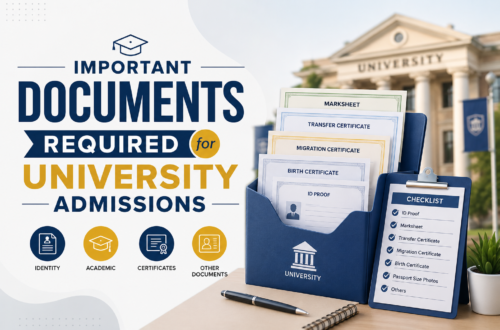
Required Documents for Admission
Students usually need several documents during the application process.
Commonly Required Documents
- CNIC or B-Form
- Passport-size photographs
- Academic transcripts
- Result cards
- Domicile certificate
- Character certificate
- Entry test result
- Equivalence certificate (for A-Level students)
Incomplete documentation can delay or even cancel applications.
Importance of Extracurricular Activities
Top universities increasingly value students with balanced profiles.
Activities that may strengthen applications include:
- Debating
- Sports
- Volunteer work
- Leadership roles
- Competitions
- Internships
This is especially important for business schools and international-style universities.
Admission Interviews
Some universities conduct interviews after shortlisting candidates.
Interviewers may evaluate:
- Communication skills
- Confidence
- Motivation
- Academic interests
- Critical thinking
Students do not need perfect English accents to perform well. Clear communication and confidence matter more.
Scholarships and Financial Aid
Many talented students worry about university costs.
Fortunately, several top universities offer:
- Need-based scholarships
- Merit scholarships
- Financial assistance programs
- Tuition fee waivers
Institutions like Lahore University of Management Sciences and Aga Khan University are known for financial aid opportunities for deserving students.
Students should apply for aid early because deadlines may differ from regular admissions.
Common Mistakes Students Make During Admissions
Many applicants lose opportunities because of avoidable mistakes.
Missing Deadlines
Late applications are often rejected automatically.
Ignoring Merit Trends
Students sometimes apply only to extremely high-merit programs without backup options.
Poor Entry Test Preparation
Strong board marks alone may not guarantee admission.
Incomplete Documents
Missing certificates or incorrect information can create serious problems.
Applying Without Research
Students should understand:
- Program quality
- Career scope
- University reputation
- Fee structure
before applying.
Which Degrees Have the Highest Merit in 2026?
Some programs are becoming increasingly competitive due to industry demand.
Highly Competitive Degrees
- Computer Science
- Artificial Intelligence
- Software Engineering
- Medicine
- Data Science
- Cybersecurity
- Business Analytics
Technology-related programs are especially growing because of global digital transformation.
Public vs Private Universities
Both sectors have advantages.
Public Universities
Usually offer:
- Lower fees
- Strong academic reputation
- Large campuses
- High competition
Private Universities
Often provide:
- Modern facilities
- Smaller classes
- International collaborations
- Flexible environments
The best choice depends on financial situation, academic goals, and preferred learning style.
How Students Can Improve Admission Chances
Start Preparing Early
Last-minute preparation creates unnecessary stress.
Focus on Entry Tests
Strong test scores can significantly improve merit.
Improve Communication Skills
Interviews and presentations matter in many universities.
Research Multiple Universities
Do not depend on only one institution.
Stay Updated
Admission policies can change every year.
Always verify information from official university announcements.
Online Applications and Digital Admissions
Most major universities now use online admission systems.
Students can:
- Submit forms online
- Upload documents
- Pay fees digitally
- Track application status
This has made the process faster and more accessible for students across the country.
Future of Higher Education in Pakistan
Higher education in Pakistan is gradually shifting toward:
- Technology-based learning
- Research-focused programs
- International collaborations
- AI and digital skills
- Industry partnerships
Universities are also expanding programs related to future careers and remote work industries.
Final Thoughts
Getting admission into a top university in Pakistan requires more than just good marks. Students need proper planning, entry test preparation, awareness about merit systems, and strong application strategies.
Every university has different requirements, but preparation, consistency, and research can greatly improve admission chances. Instead of following pressure from society or trends blindly, students should focus on choosing programs that match their interests, strengths, and future goals.
Higher education is an important investment, and selecting the right university can shape both career opportunities and personal growth for years to come.
Frequently Asked Questions
Which university has the highest merit in Pakistan?
Merit varies by program, but universities like National University of Sciences and Technology, Lahore University of Management Sciences, and medical colleges are often highly competitive.
Are entry tests compulsory for university admissions?
Most top universities require entry tests, especially for engineering, medicine, and business-related programs.
Can students apply to multiple universities at the same time?
Yes. Most students apply to several universities to improve their chances of admission.
Do extracurricular activities matter for admissions?
Yes, especially in private universities and business schools where leadership and communication skills are valued.
Are scholarships available for deserving students?
Yes. Many universities offer merit-based and need-based financial aid programs.




One comment on “Admission Requirements for Top Universities in Pakistan”